
Linen is among the earliest textiles produced by humankind, and its history can be traced through extensive archaeological, botanical, and material evidence. Derived from the fibers of the flax plant (Linum usitatissimum), linen has accompanied the development of agriculture, settlement, trade, and social organization. Its presence in archaeological contexts provides valuable insight into early technological skill, cultural values, and daily life.
The earliest evidence of flax fiber use dates back approximately 36,000 years, discovered in Dzudzuana Cave in present-day Georgia. Microscopic analysis revealed twisted and dyed flax fibers, suggesting not only fiber use but also early textile processing and aesthetic awareness.
Systematic cultivation of flax began much later, during the Neolithic period (circa 8000-7000 BCE), alongside the domestication of plants and animals. Archaeological remains of flax seeds, tools for fiber processing, and woven fragments have been found in regions of the Fertile Crescent and throughout early agrarian Europe.
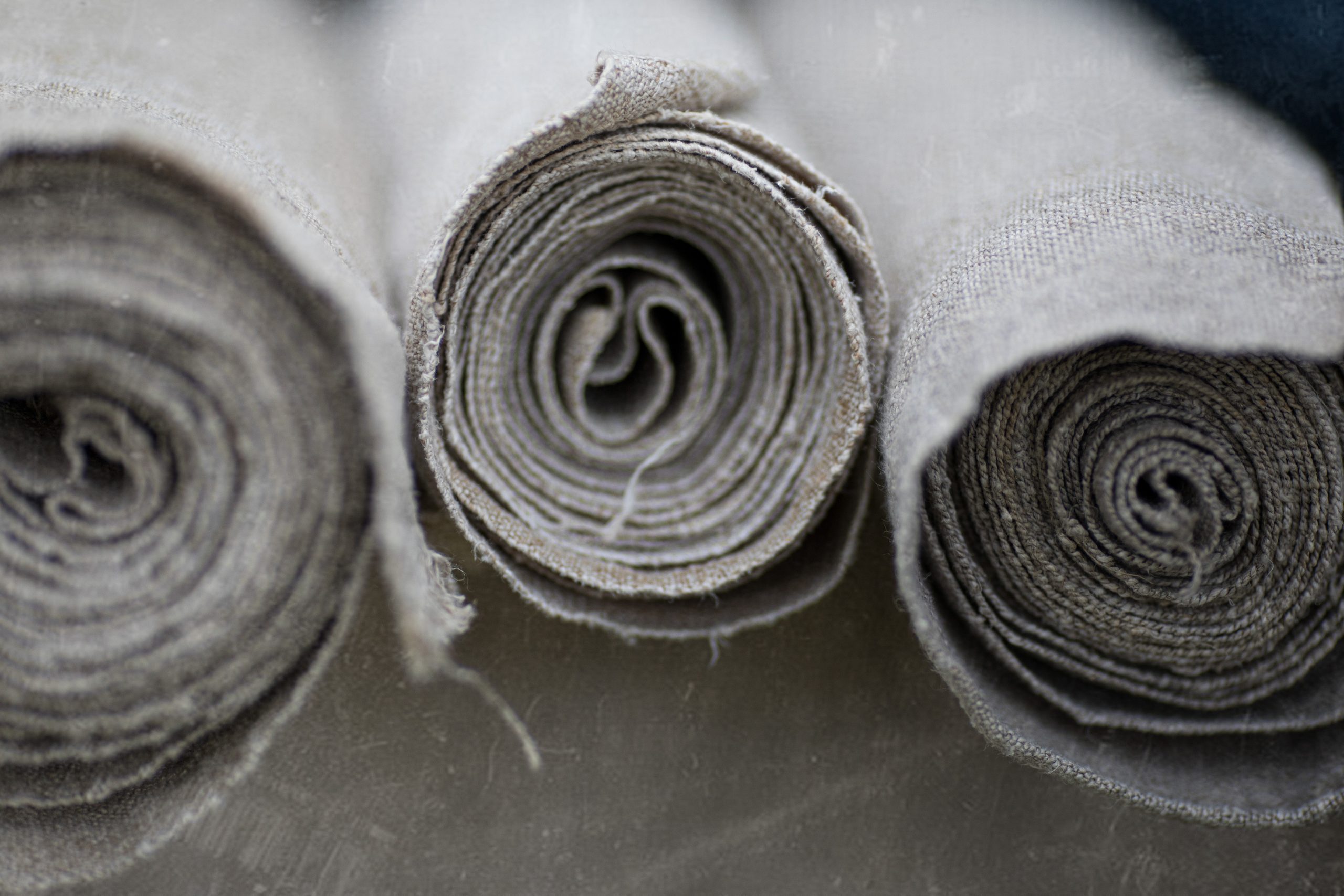
Linen in Ancient Egypt
Ancient Egypt provides the most extensive and well-preserved archaeological record of linen production and use. Due to Egypt’s dry climate, linen textiles have survived for millennia, allowing detailed study of weaving techniques, thread counts, and garment construction.
Linen in Egypt held both practical and symbolic significance. It was associated with purity, ritual cleanliness, and divine order (maat). Priests wore linen garments during ceremonies, and mummification practices involved wrapping the deceased in carefully layered linen bandages. Some surviving examples exhibit extraordinarily fine weaving, with thread counts exceeding modern standards, indicating highly specialized craftsmanship.
Linen functioned not only as clothing but also as a form of currency, offering, and household staple, underscoring its central role in Egyptian society.
Linen Across the Ancient Mediterranean
Archaeological evidence confirms the widespread use of linen across Mesopotamia, the Aegean, Greece, and Rome. Linen fragments, loom weights, and flax-processing tools have been uncovered in domestic and military contexts.
In ancient Greece, linen armor (linothorax) was commonly used, offering protection while remaining lightweight and breathable. Roman sources describe linen garments, sails, and household textiles, emphasizing durability and hygiene. Literary and material records together demonstrate linen’s adaptability across social classes and functions.
Medieval Europe and Regional Linen Traditions
During the medieval period, flax cultivation and linen production became deeply embedded in European rural economies. Archaeological finds from settlements and monasteries include spinning tools, retting pits, and woven linen fragments.
Regions such as Flanders, Ireland, the Baltic states, and Eastern Europe developed strong linen traditions, supported by suitable climates and access to water for retting. Linen was valued for undergarments, bedding, and household textiles due to its ability to withstand repeated washing – an important factor in premodern hygiene.
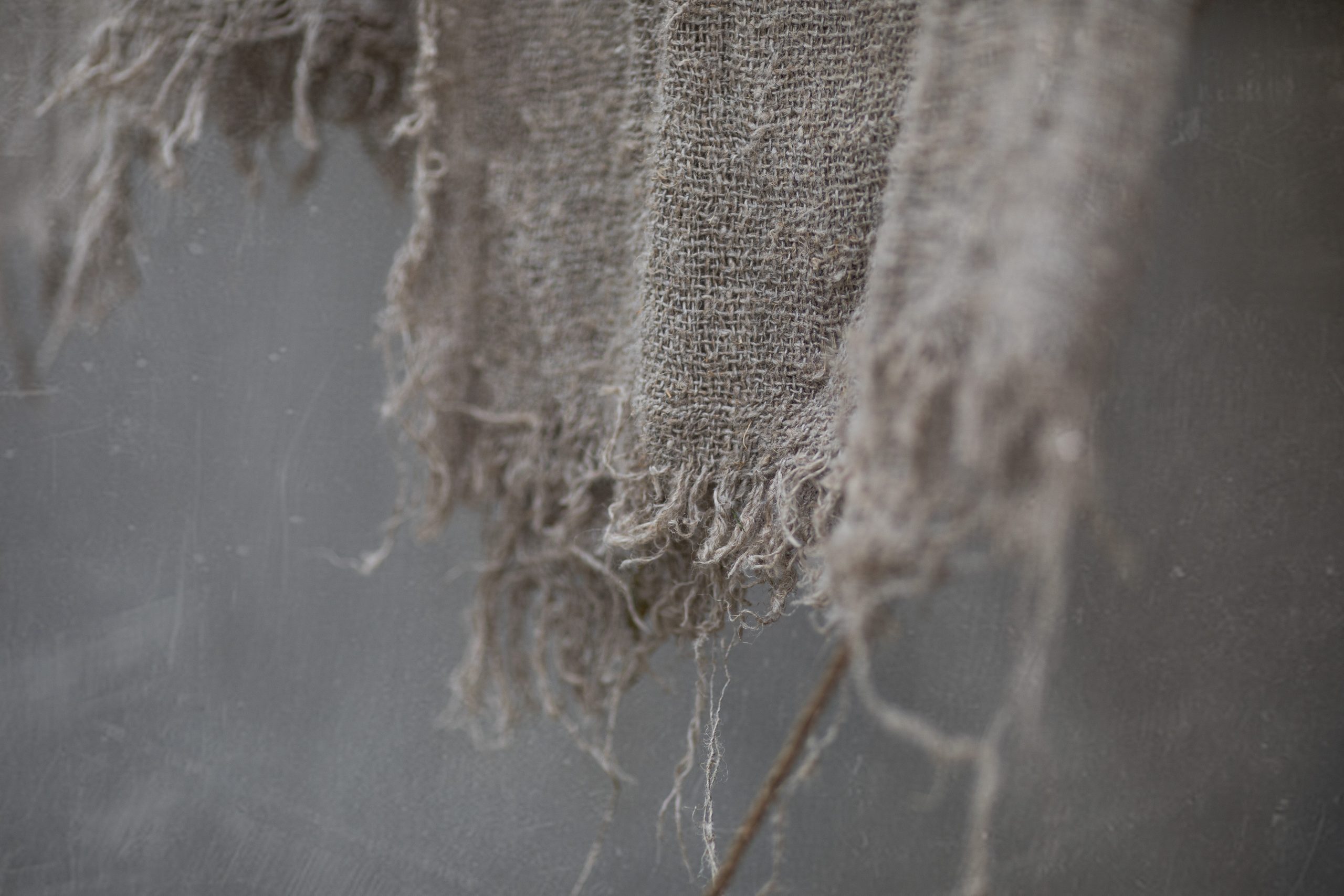
The Rise of the Cotton Industry
By the late eighteenth and nineteenth centuries, linen’s long-standing dominance began to wane with the rapid expansion of the cotton industry. This shift was not due to linen’s functional inadequacy, but rather to economic, technological, and colonial factors.
Cotton fibers, shorter and easier to process mechanically, were well suited to the new spinning and weaving machines of the Industrial Revolution. Innovations such as the spinning jenny and power loom favored cotton over flax, which required longer, more labor-intensive preparation stages. As a result, cotton textiles could be produced faster, cheaper, and in far greater quantities.
Colonial trade networks further accelerated cotton’s rise. Vast plantations in the Americas, sustained by enslaved labor, supplied European industries with an abundance of raw cotton. Linen, rooted in local agriculture and seasonal cycles, could not compete with this scale of production. Consequently, linen gradually lost its position as the primary everyday textile and became associated instead with household goods, regional traditions, or higher-quality applications.
Despite this decline in popularity, linen never disappeared. Archaeological and historical records show its continued use for workwear, domestic textiles, and specialized purposes where strength and hygiene were essential.
Linen in Contemporary Textile Studies
In modern textile and material culture studies, linen is increasingly examined as an example of sustainable pre-industrial production. Researchers value linen for its minimal environmental impact, durability, and biodegradability – qualities that contrast sharply with the resource-intensive cotton industry that replaced it.
Museum collections and conservation laboratories study surviving linen artifacts to understand ancient weaving techniques, regional practices, and social meaning. Fiber analysis, loom reconstruction, and experimental archaeology allow scholars to reconstruct the embodied knowledge of flax processing – much of which was traditionally transmitted through practice rather than written records.
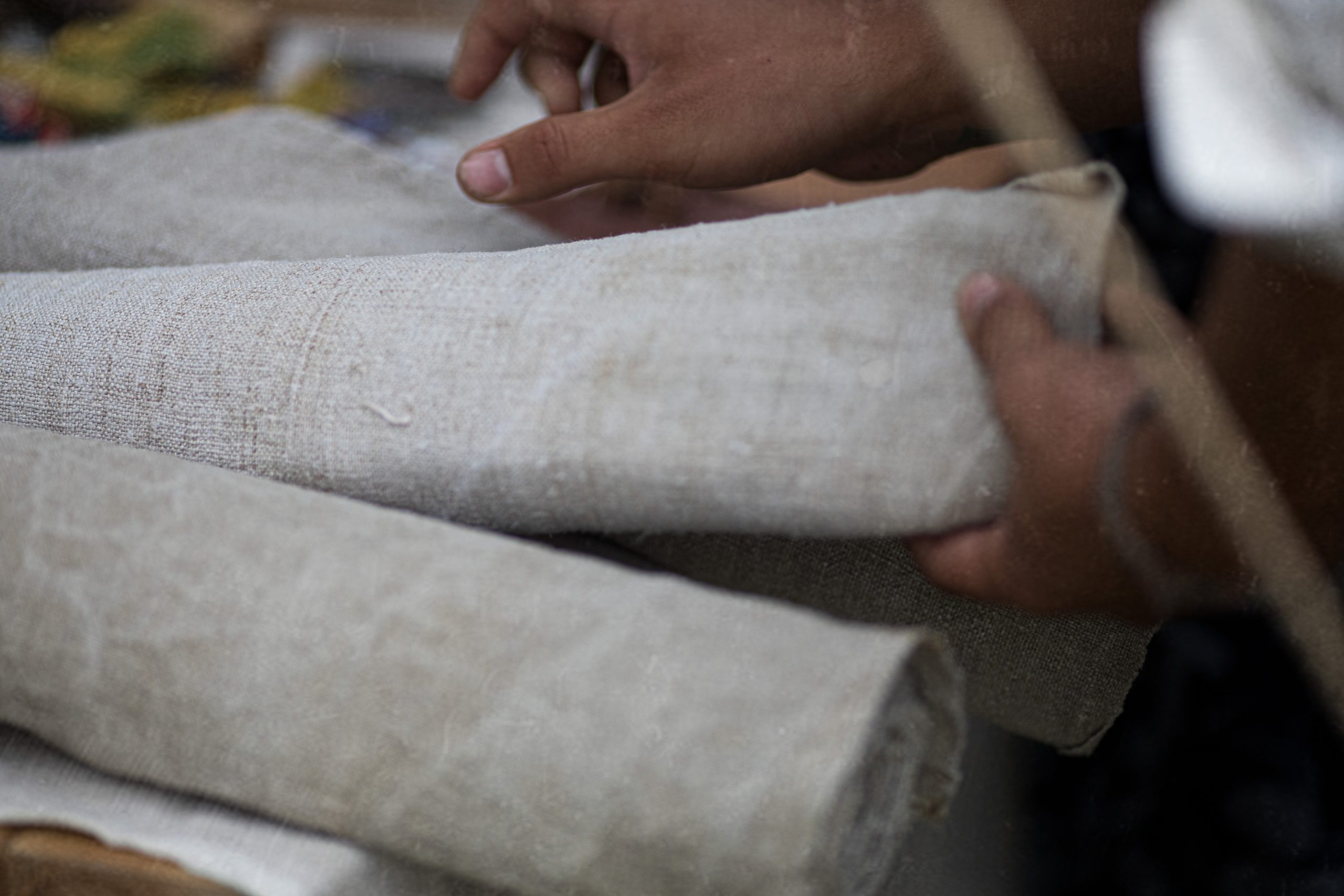
A Material of Continuity
From prehistoric fiber experiments to ancient ritual cloths, medieval household textiles, and modern sustainable fashion, linen represents continuity rather than obsolescence. Its temporary decline following the rise of cotton reflects industrial priorities rather than material failure.
Today, linen is once again appreciated for the very qualities that defined it historically: resilience, adaptability, and a close relationship with the natural environment. Through archaeological evidence and textile scholarship, linen emerges not merely as a fabric, but as a material archive of human ingenuity and cultural memory.
Leave a Reply