
In a world that moves quickly, clothing has become increasingly complex – not in how it looks, but in how it must be cared for. Labels that say “dry clean only”, synthetic blends that trap odors, and garments that lose their shape after a few washes have become the norm. But it wasn’t always this way.
There is something deeply meaningful about returning to practicality – creating and choosing clothing that can be gently washed at home, cared for with simple rituals, and worn for years.
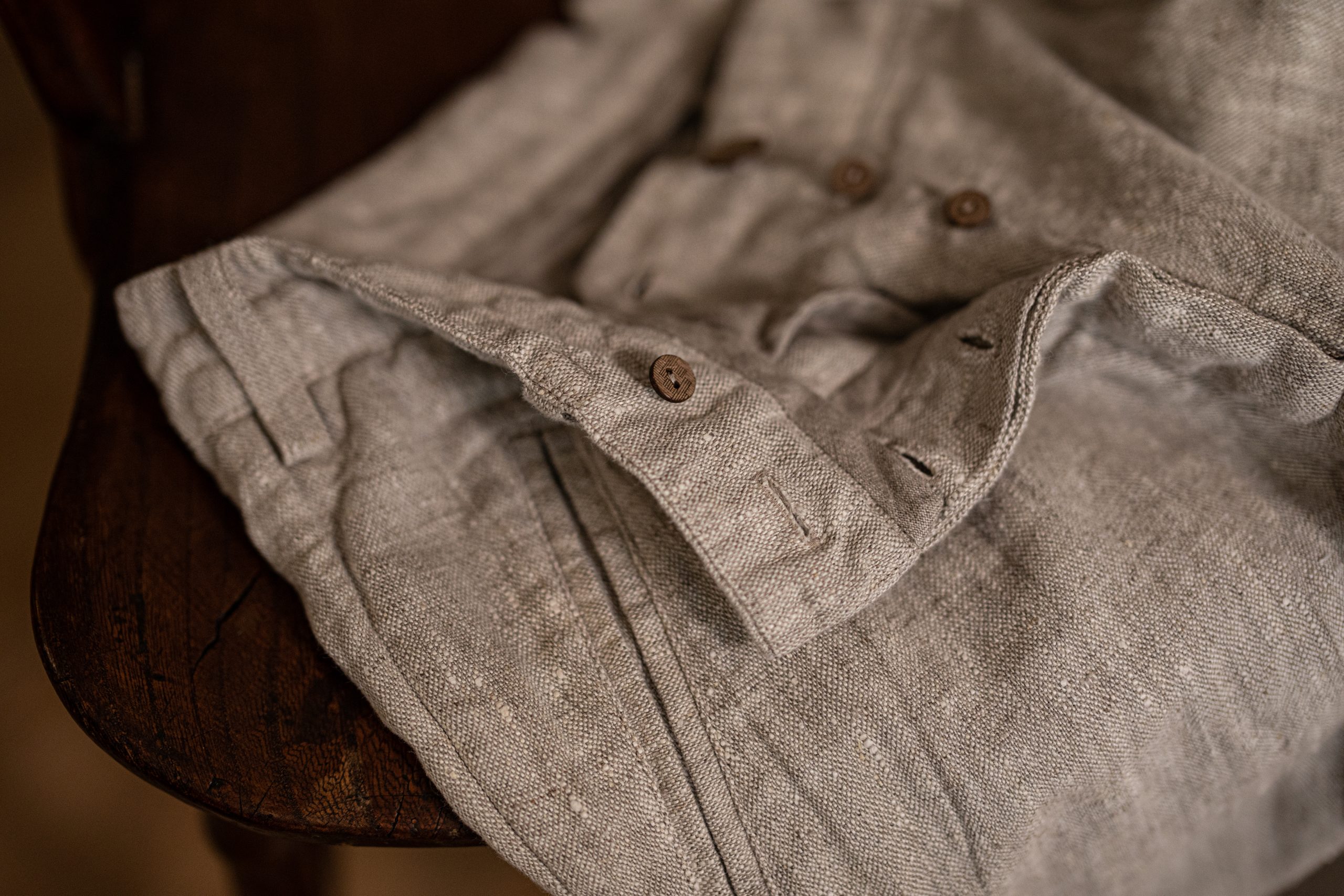
Clothing That Lives With You
Practical garments are not just about convenience; they are about building a relationship with what we wear. When a piece can be hand-washed or cleaned on a delicate machine cycle, it becomes part of your everyday life rather than something reserved or distant.
You don’t need to plan a special trip to the dry cleaner. You don’t need harsh chemicals to maintain it. You simply care for it – with water, with time, with attention. This kind of care creates a slower, more conscious rhythm. The introduction of synthetic fabrics and chemical cleaning changed this relationship. While it brought convenience in some ways, it also distanced us from the natural cycle of use and care, and introduced substances that are not always kind to our bodies or the environment.
Before the rise of mass production, clothing was made from natural fibers like linen, hemp, nettle, cotton, and wool. These garments were created with real life in mind – they were breathable, repairable, and washable by hand. People washed their clothes in rivers, basins, or simple tubs. There was no separation between life and care. Clothing was not disposable; it was lived in, softened over time, and often passed down. When the owner washed and cared for a garment themselves, they created a close, personal connection with it. Of course, this connection was also shaped by another important factor: they either knew the tailor who made their clothing or made it themselves. This naturally creates a deeper desire to take care of the garment. If you have this opportunity, choose to buy clothing from trusted sources and get to know the people who create it. This will help you build a meaningful relationship not only with the maker, but with the garment itself.
Simplicity as a Form of Luxury
There is a certain luxury in simplicity – in knowing that what you wear does not demand complicated care. That it can be washed, dried naturally, and worn again without stress.
Practical clothing is not lesser. It is wiser. It is clothing that understands life: movement, seasons, change. It adapts, softens, and becomes more beautiful with time.
A Quiet Shift
Perhaps the future of clothing is not about more innovation, but about remembering. Returning to materials that breathe. Designs that allow movement. Garments that can be cared for gently, at home.
Because when clothing becomes easier to care for, life becomes a little softer too. And in that softness, there is something profoundly human.
* For more detailed guidance on how to care for your linen garments, you can read my previous article here https://knockknocklinen.com/caring-for-linen-clothing/
Leave a Reply